

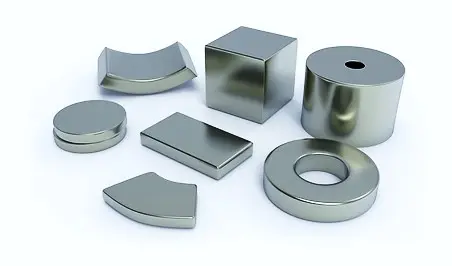
Magnetic materials and assemblies are integral to the functionality and advancement of many modern technologies. From the simple use of a refrigerator magnet to the complex operation of MRI machines, the applications of magnetic materials span a wide array of industries, contributing significantly to the development of electronics, energy systems, transportation, and healthcare. The evolution of magnetic materials, their varied properties, and how they are assembled to create powerful systems is a fascinating area of study that continues to drive innovation across various sectors. In this article, we explore the diverse world of magnetic materials, the assemblies they form, and their critical roles in contemporary and future technologies.
1. Understanding Magnetic Materials
Magnetic materials are substances that respond to magnetic fields, either by creating their own magnetic fields or by being influenced by external ones. These materials exhibit different magnetic behaviors depending on how their atomic or molecular magnetic moments align when subjected to a magnetic field. The primary categories of magnetic materials include:
-
Ferromagnetic Materials: These materials are highly magnetic and retain their magnetization even after the external magnetic field is removed. Examples include iron, cobalt, and nickel. The magnetic domains in these materials align, producing a strong, permanent magnetic field. This property is crucial in devices like motors, transformers, and hard drives.
-
Paramagnetic Materials: Paramagnetic materials, such as aluminum and platinum, have weak magnetic properties. They are weakly attracted to magnetic fields, but once the external field is removed, they lose their magnetization. These materials are used in applications requiring temporary or weak magnetic effects, such as certain types of sensors and medical equipment.
-
Diamagnetic Materials: Diamagnetic materials exhibit weak repulsion to magnetic fields. Unlike paramagnetic materials, they do not become magnetized in response to an external field. Materials such as copper and graphite are diamagnetic and are used to create magnetic shields or to reduce unwanted interference in sensitive electronic devices.
-
Ferrimagnetic Materials: Similar to ferromagnetic materials, ferrimagnetic materials also have magnetic properties but with opposing magnetic moments that do not completely cancel each other out. Ferrites, commonly used in electronics for their high electrical resistance, are a prime example. These materials are used in inductors, transformers, and other high-frequency applications.
-
Antiferromagnetic Materials: These materials have magnetic moments that align in opposite directions, effectively canceling each other out at the macroscopic level. While they do not produce a net magnetization, their unique magnetic properties make them useful in specialized sensors and spintronic devices.
2. Key Magnetic Properties and Their Importance
Magnetic materials are characterized by several important properties that determine their behavior and suitability for various applications. The key properties include:
-
Magnetic Permeability: This refers to the ability of a material to conduct magnetic lines of force. Materials with high permeability are efficient at channeling magnetic fields, which makes them ideal for use in transformers, magnetic shields, and inductors.
-
Coercivity: Coercivity is the resistance of a material to demagnetization. Materials with high coercivity retain their magnetic properties even in the face of external magnetic fields. This is crucial for permanent magnets used in motors, speakers, and hard disk drives, where consistent and stable magnetism is required.
-
Saturation Magnetization: This property measures the maximum magnetization that can be achieved by a material when subjected to an external magnetic field. Once a material reaches saturation, it cannot become more magnetized, which is an important consideration in the design of magnetic devices.
-
Curie Temperature: The Curie temperature is the temperature at which a ferromagnetic material loses its magnetization and becomes paramagnetic. This temperature is crucial for high-temperature applications like electric motors or power generators, where maintaining magnetism at elevated temperatures is a concern.
-
Remanence: Remanence refers to the magnetic field that remains in a material after an external magnetic field has been removed. Permanent magnets need to have high remanence to ensure that they retain their magnetism for long periods, making them ideal for use in everything from electric motors to magnetic sensors.
3. Magnetic Assemblies: The Building Blocks of Magnetic Devices
Magnetic assemblies combine multiple magnetic components to create systems that can perform specific tasks. These assemblies can take various forms depending on the application and the desired outcomes. Here are some common magnetic assemblies:
-
Permanent Magnets: These are materials that naturally retain their magnetization over time without requiring an external power source. Permanent magnets, typically made from ferromagnetic materials, are used in applications like motors, sensors, speakers, and magnetic storage devices. Neodymium and samarium-cobalt magnets are particularly strong, making them suitable for compact devices with high magnetic needs.
-
Electromagnets: Electromagnets are created by running an electric current through a wire wound around a magnetic core, producing a magnetic field. The magnetic field strength can be controlled by adjusting the current. Electromagnets are widely used in applications like relays, solenoids, and cranes for lifting heavy objects, as well as in devices like speakers and MRI machines.
-
Magnetic Sensors: Magnetic sensors detect changes in magnetic fields and convert this information into electrical signals. These sensors are used in a variety of applications, including automotive systems (for wheel speed and position sensing), consumer electronics (such as magnetic compasses in smartphones), and industrial automation (for proximity and position sensing).
-
Transformers and Inductors: Transformers use magnetic assemblies to transfer electrical energy between circuits by using the principles of electromagnetic induction. Inductors store energy in a magnetic field. Both transformers and inductors rely on magnetic materials like iron and ferrites to ensure efficient energy transfer and storage.
-
Magnetic Shields: Magnetic shields are used to protect sensitive electronic devices from unwanted magnetic interference. These shields are often made from high-permeability materials like mu-metal, which absorb and redirect external magnetic fields. Magnetic shielding is particularly important in applications like data storage devices, medical imaging systems (MRI), and scientific instruments.
4. Applications of Magnetic Materials and Assemblies
neodymium rubber magnet are at the heart of numerous technologies, from consumer electronics to large-scale industrial systems. Here are some of the key areas where magnetic materials are used:
-
Data Storage: Magnetic materials are essential for traditional data storage devices such as hard disk drives (HDDs) and magnetic tapes. In HDDs, data is stored by magnetizing small regions of a magnetic disk. The development of increasingly powerful magnetic materials has enabled more compact and high-capacity storage devices, as well as the creation of new memory technologies like magnetoresistive random access memory (MRAM).
-
Medical Imaging: One of the most significant applications of magnetic materials is in magnetic resonance imaging (MRI). MRI machines use powerful magnets to generate magnetic fields that interact with the hydrogen atoms in the human body. This allows for non-invasive imaging of internal structures. Superconducting magnets, which can generate exceptionally strong and stable magnetic fields, are often used in MRI machines.
-
Electric Motors and Generators: Electric motors convert electrical energy into mechanical motion using the interaction of magnetic fields and electric currents. Magnets are also essential in generators, where mechanical motion is converted into electricity. Both of these devices rely on magnetic materials to function efficiently, from small motors in household appliances to large generators in power plants.
-
Transportation: Magnetic materials play a crucial role in transportation systems, particularly in maglev (magnetic levitation) trains. These trains use magnetic fields to levitate and propel the train forward without touching the tracks, eliminating friction and allowing for much higher speeds. This technology has the potential to revolutionize high-speed rail systems worldwide.
-
Consumer Electronics: Magnetic materials are found in a wide range of consumer electronics, from smartphones to headphones. Small but powerful magnets are used in speakers, microphones, vibration motors, and other components to improve the performance of these devices. Magnetic sensors are also integral to various functions, such as detecting motion or orientation in smartphones.
5. Future Trends in Magnetic Materials and Assemblies
The future of magnetic materials and assemblies looks bright, with continuous advancements driving innovation across multiple sectors. Some emerging trends include:
-
Nanomagnetic Materials: Researchers are exploring the use of magnetic materials at the nanoscale, where their unique properties can enable new functionalities. Nanomagnetic materials have applications in areas like data storage, quantum computing, and high-sensitivity sensors. These materials could lead to smaller, faster, and more energy-efficient devices.
-
High-Temperature Superconducting Magnets: Superconducting magnets, which operate without electrical resistance, are poised to revolutionize several industries, including energy transmission and medical imaging. Researchers are working to develop high-temperature superconductors, which would make these magnets more practical and cost-effective for widespread use.
-
Magnetic Energy Storage: Magnetic materials are being studied for their potential to store energy efficiently. Magnetic flywheels, for example, can store energy as rotational motion in a magnetic field, offering a promising solution for renewable energy storage and stabilization. Other magnetic energy storage technologies, such as magnetic batteries, are also being developed.
-
Spintronics: Spintronics is an emerging field that exploits the intrinsic spin of electrons, in addition to their charge, to process and store information. Magnetic materials are critical to this field, which could lead to faster and more energy-efficient electronics, as well as advancements in quantum computing.
Conclusion
Magnetic materials and assemblies are foundational to the development of many modern technologies. From their role in data storage and medical imaging to their applications in transportation and consumer electronics, magnetic materials continue to shape the way we live, work, and interact with technology. As research into new materials and applications continues, we can expect even greater innovations in the coming years, unlocking the full potential of magnetism in a variety of industries.